Problem
RHGE works in public schools of Bwari Area Council, on the edge of Abuja in Nigeria’s Federal Capital Territory, and the problems students raise differ by school. In school safety sessions in September 2025, bullying and fighting were the main concerns in Kubwa. In Jiwa they were teen pregnancy and poverty, and in Byazhin sexual harassment and poverty, the foundation reported.
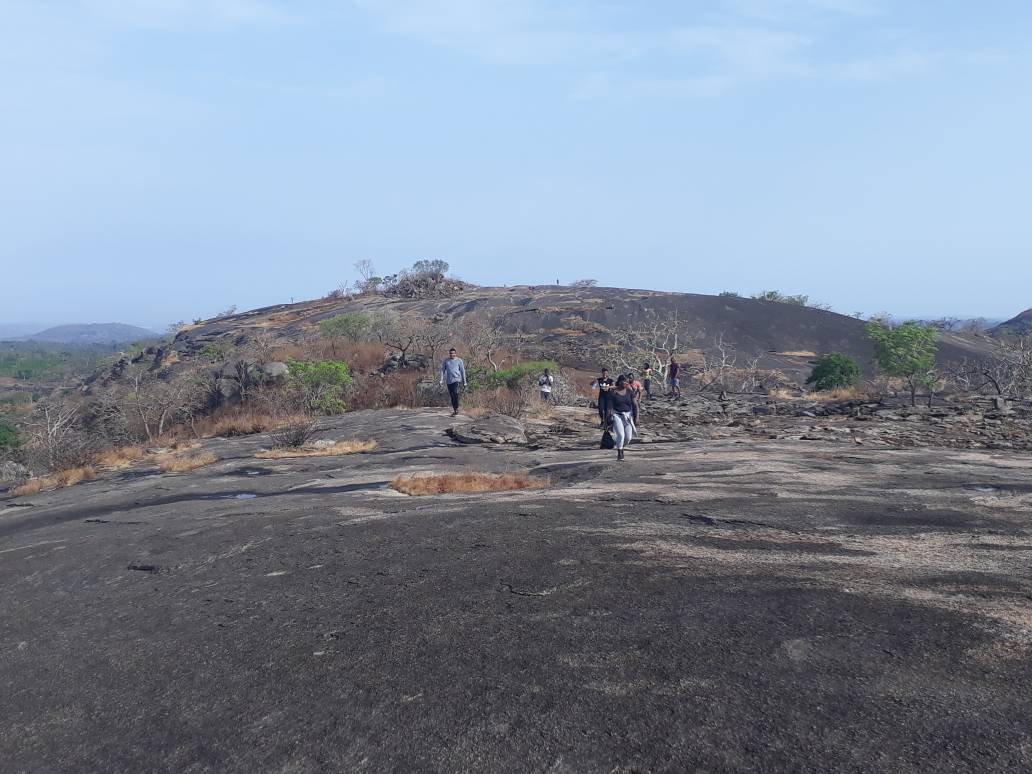
Money keeps some girls out of class. In 2025 RHGE paid school fees and parent-teacher association contributions for 100 girls at risk of dropping out, it says. Across Nigeria, UNICEF counted 7.6 million out-of-school girls at primary and junior secondary level in a June 2022 fact sheet, based on 2018 government data.
Reading is another struggle. RHGE says crowded classrooms, scarce resources and language barriers leave teachers little time to help weak readers one by one, and many learners move between a local language and English. Teachers need support too: in August 2025, the head of Nigeria’s Universal Basic Education Commission said more than 60% of public primary school teachers lacked basic digital literacy, The Guardian Nigeria reported.
AI solution
Mostly, RHGE teaches students and teachers to use existing AI tools. It has built one app of its own.
One of its best-documented AI projects is about art. In the 2024 to 2025 Ciena Solutions Challenge, run by Digital Promise, students from Kubwa, Bwari and Dutse made drawings about issues girls face, such as early marriage, teenage pregnancy, trafficking and street trading. They used AI image tools to turn the drawings into digital artworks, then wrote blogs on the same issues in Wix and made infographics in Canva. RHGE’s ITU entry lists ChatGPT, Copilot, DALL-E and OpenArt.ai among the tools.
With a grant from dRPC (the development Research and Projects Centre), funded by the Ford Foundation, RHGE opened a computer lab with internet at Junior Secondary School Dutse Alhaji 2 on July 8, 2025, and a second at JSS Byazhin that September.
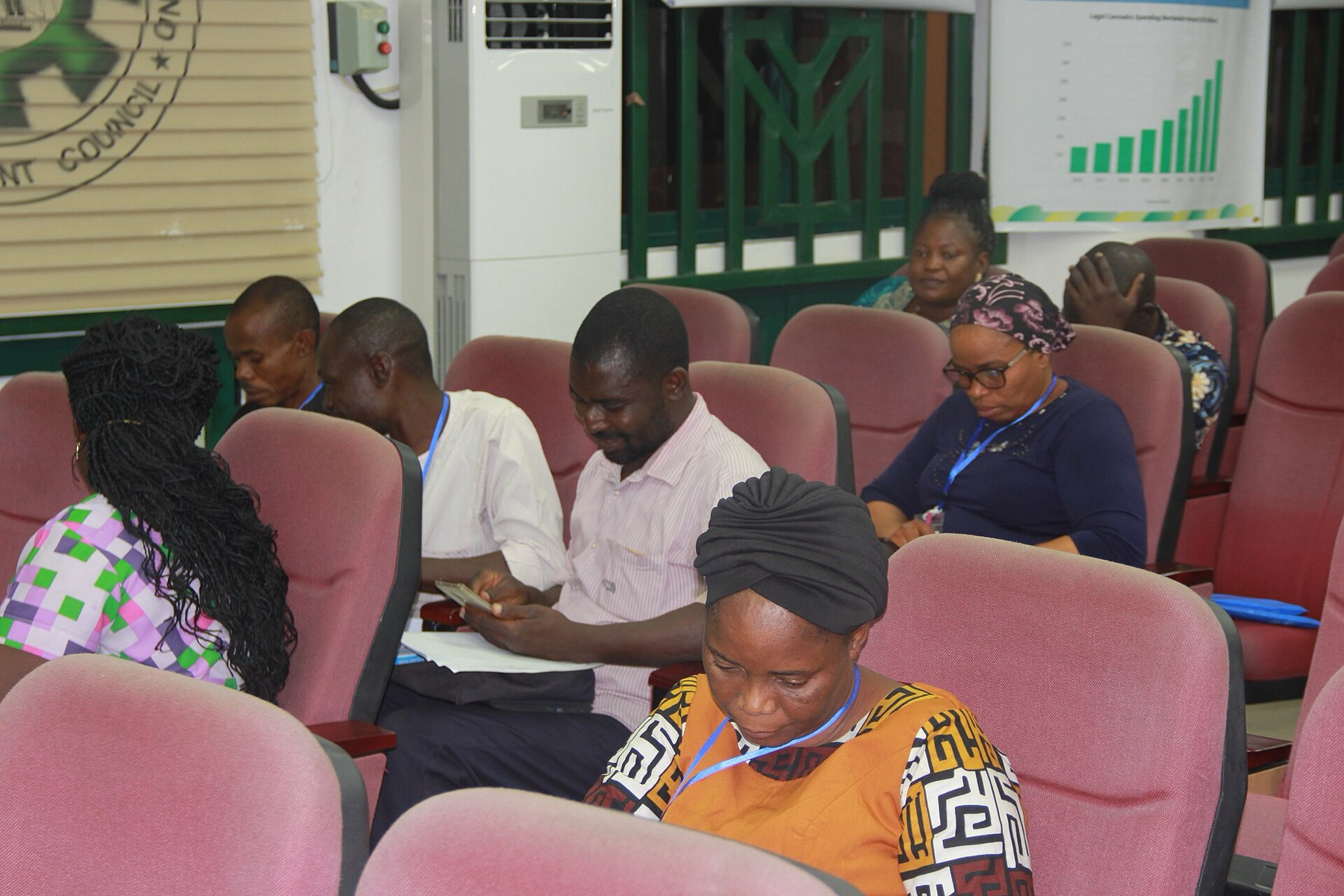
RHGE’s train-the-trainer course shows teachers how to use AI chatbots and design tools to write lesson plans for the Nigerian curriculum, build quizzes and grade big classes. It also covers bias and academic honesty. Teachers with little access to a computer practice with Meta AI on WhatsApp. RHGE also trains teachers in gender-responsive teaching, to remove prejudice against girls taking part in STEM subjects that many see as boys’ subjects.
With ReadBuddy, a student reads a story aloud, line by line, on a phone, tablet or laptop. Speech recognition, the kind of AI that turns spoken words into text, follows the reading. The app points out mispronounced and difficult words and gives feedback, and teachers get session reports and progress charts. Sources describe the technology behind it differently, and RHGE has not said which AI model it uses now. The AI-guided reading needs a connection. Offline, students can read stored stories while a teacher listens and scores them, according to ReadBuddy’s site.
How ReadBuddy works
- 01 Read A student reads a story aloud, line by line, on a phone, tablet or laptop.
- 02 Listen Speech recognition turns the spoken words into text and follows the reading.
- 03 Feedback The app points out mispronounced and difficult words; teachers get session reports and progress charts.
Impact
The awarding bodies confirm the awards. Digital Promise lists RHGE among 62 teams given Ciena Solutions Challenge Sustainability Awards in both 2025 and 2026, with $750 each time: first for the girls’ rights project, then for a school safety reporting project. On July 8, 2026, ITU’s AI for Good Impact Awards named ReadBuddy the AI for People winner from close to 300 applications in 65 countries.
The other figures come from RHGE, and they vary from one report to the next. In July 2025, RHGE said, it reached 597 students and trained 122 teachers in Dutse Alhaji and Kubwa, with 180 students getting hands-on digital training. By March 2026 it reported 312 teachers trained in AI literacy. In August 2026 it said ReadBuddy had reached more than 1,200 students and 1,000 instructors. The July 2026 award announcement repeats those figures and adds that, through a wider STEM program, coverage reached more than 7,000 children. The 1,000 and 7,000 figures match the targets RHGE set in its 2025 ITU entry. No source explains how any of these were counted.
In August 2026, RHGE said participating learners’ reading accuracy rose from 58% to 83% over six weeks with ReadBuddy, and that teachers saw more engagement from students who had been shy to read aloud. It has not published how many learners took part, how accuracy was measured or whether any group was compared. The first pilot, at JSS Byazhin in September 2025, reported accuracy between 0% and 67%.
RHGE’s own July 2025 monitoring scored trained students’ digital skills at 10 out of 10, but no results are published on whether the workshops changed girls’ interest in STEM or kept them in school. ReadBuddy is early-stage, about a year past its first pilot, and runs through RHGE’s labs in Byazhin, Dutse and Kubwa, according to the ITU announcement. For 2026 to 2027, RHGE plans seven new labs in Nasarawa, Niger and Kogi states, aiming at 40,000 learners and 5,000 teachers, the ITU announcement says.
People
Oghogho Ahanor worked as a teacher in Nigeria for five years and founded RHGE, which began as a grassroots group in Kubwa in 2020 and registered with Nigeria’s Corporate Affairs Commission in 2022. The foundation’s website says she started it out of concern that girls’ education was neglected in Nigerian communities. She is the educator named on both Ciena awards.
From grassroots group to award-winning app
- 2020RHGE begins as a grassroots group in Kubwa.
- 2022It registers with Nigeria's Corporate Affairs Commission.
- July 8, 2025A computer lab with internet opens at Junior Secondary School Dutse Alhaji 2.
- September 2025A second lab opens at JSS Byazhin, where ReadBuddy has its first pilot.
- July 8, 2026ReadBuddy wins the AI for People category of ITU's AI for Good Impact Awards.
The team is small. Onyekwelu Blessing Onyinye coordinates school projects, and the website lists four other team members.
Teachers carry much of the work. Most of the 28 teachers trained at Dutse Alhaji in July 2025 were women, RHGE reported, and trained teachers are asked to teach their colleagues. Students shape it too. In Kubwa, RHGE says, students formed their own teams to make digital campaigns against school violence, and students helped design its anonymous app for reporting violence at school. This story names no student, because they are children.
RHGE built and piloted ReadBuddy during a generative AI cohort run by Team4Tech. In 2026 it launched “Can AI Understand Her?”, where native speakers judge how well commercial speech models handle Yoruba, Igbo, Hausa, Kanuri and Ijaw.
Why it matters
A former teacher and a small team have grown their school work into computer labs, teacher training and a reading app inside Bwari’s public schools, where girls use AI to speak about issues in their own lives. Independent evaluations of ReadBuddy and the workshops would show whether the approach can work elsewhere in Nigeria.
What we could not confirm
- The latest update from RHGE on ReadBuddy that we found is from August 28, 2026.
- All reach and reading figures come from RHGE. No source says how learners and teachers were counted, or how many took part in the 58% to 83% result.
- Sources differ on the technology: Team4Tech says ReadBuddy runs on GPT-3.5, while RHGE and ITU name no model.
- ITU’s announcement lists a lab in Kubwa. The RHGE reports we found document labs in Dutse Alhaji and Byazhin, not Kubwa.
Questions people ask
What is ReadBuddy?
An AI reading companion built by the Rising Hope Girls Educational Foundation in Abuja, Nigeria. Students read aloud, and the app flags mispronounced or difficult words, gives feedback and reports progress to teachers. It won the AI for People category of ITU's AI for Good Impact Awards on July 8, 2026.
Does ReadBuddy work without internet?
Partly. Its AI-guided reading works online. Offline, students read stored stories and teachers score them by listening.
Has ReadBuddy improved reading?
RHGE reports that learners' reading accuracy rose from 58% to 83% over six weeks. It has not published the sample size or method, and no independent evaluation is public.
This story supports
Sources (18)
Digital Promise, Announcing the 2025 Ciena Solutions Challenge Sustainability Awards, April 16, 2025
Digital Promise, Announcing the 2026 Ciena Solutions Challenge Sustainability Awards, April 16, 2026
ReadBuddy home page, checked October 25, 2026 (online and offline modes, teacher scoring)
RHGE, Can AI Understand Her? Benchmarking AI Performance for Nigerian Languages, August 12, 2026
Fact-checked against sources on October 25, 2026. Spot an error? Tell us.