Problem
Kwon Min-kyung’s child struggles to say what they need. Speaking to KBS News in October 2026, she explained what happens instead: “Because they can’t express themselves well, they pull at mom’s hand, and now that they are getting bigger and stronger, it hurts when they pull.” (translated by AI for Kind)
Many people with severe developmental disabilities, such as intellectual disability or autism, express needs or discomfort through what specialists call “challenging behavior.” That can mean hitting themselves, hitting others or breaking things. It can come on suddenly, and it can hurt the person and the people caring for them.
Helping someone reduce these behaviors starts with good records: when each episode happened, how long it lasted, and what came just before. But care centers are short of staff and depend on handwritten logs. When an incident happens, staff deal with the person first, so the record often goes unwritten.
People who are hard to care for are often refused places in care facilities, and care workers tend not to stay long. Newspim reported in June 2026 that annual staff turnover reportedly reaches 50% at some sites. In 2023, about 36,000 people with developmental disabilities lived in Seoul alone, according to the city government.
AI solution
CareVia, built by SK Telecom, runs on the CCTV cameras a center already has, so it needs no new equipment. A small AI model has learned to recognize nine kinds of challenging behavior: kicking, hitting, pushing and pulling, falling, self-harm such as hitting one’s head, lying down, running, wandering and jumping.
When the system spots one of these behaviors, it records the type, how often it happens and how long it lasts, and saves the video from just before and after. Face and clothing recognition tells individual people apart.
A behavior intervention specialist then reviews the statistics and clips remotely to find out what upset the person, and builds a support plan around it. Teachers see the same data, and it is used in parent education, so the person meets the same approach at the center and at home.
How it works
- 01 Detect AI on the center's existing cameras spots nine kinds of challenging behavior.
- 02 Log It records type, frequency and length, and keeps the clip from just before and after.
- 03 Plan A behavior specialist reviews the log to find triggers and plan support with staff and families.
The AI does not step in when a behavior happens, and it does not prevent self-harm. It handles observation and paperwork. People still have to understand the causes, including things outside the center that never appear on camera, and an SK Telecom official told Dealsite the cameras sometimes miss small movements.
One teacher, quoted anonymously by SK Telecom, described the difference: “Even when the teacher in charge is away from their seat, the AI automatically detects the challenging behavior and lets us know, and we can watch what happened before and after remotely, again and again, so it really helps us understand the context of the behavior.” (translated by AI for Kind)
Impact
CareVia began as research with Seoul National University Hospital in 2021 and 2022. It was piloted with the Seoul Metropolitan Government at centers in Jongno and Dobong from November 2023 and officially launched in September 2024. It is deployed but small: 12 facilities, an SK Telecom official told Dealsite in October 2026, short of a goal of 18 by the end of 2025 because expansion depends on budgets. The company’s own figures vary: its 2025 community report gives 7 facilities as of mid-2026 in one place and 18 in another.
The clearest result is less paperwork. SK Telecom said in August 2025 that behavior recording takes up to 90% less time than before in the same settings.
Early signs for the people supported are encouraging, but the evidence is limited:
- At four Seoul care facilities using the system, the number of challenging behaviors fell to about half of the previous year’s level, KBS reported on October 20, 2026. The report does not say who did the count or how.
- At one Seoul support center, a man with autism showed 34.6% fewer challenging behaviors after three months of support planned with the AI data, compared with the quarter before, according to SK Telecom in August 2025. This is a single case, with no comparison group (Newspim later described the same figure as an average).
No peer-reviewed or independent evaluation of these outcomes has been published.
Privacy is an open question. The people on camera are adults who may not be able to consent for themselves, and the system identifies individuals and keeps clips for remote review. SK Telecom’s entry for the ITU report says raw video stays on the device, which does not match its newsroom’s account of teachers rewatching clips remotely. None of the public sources explains who consents on a person’s behalf, who can see the clips, or how long they are kept.
People
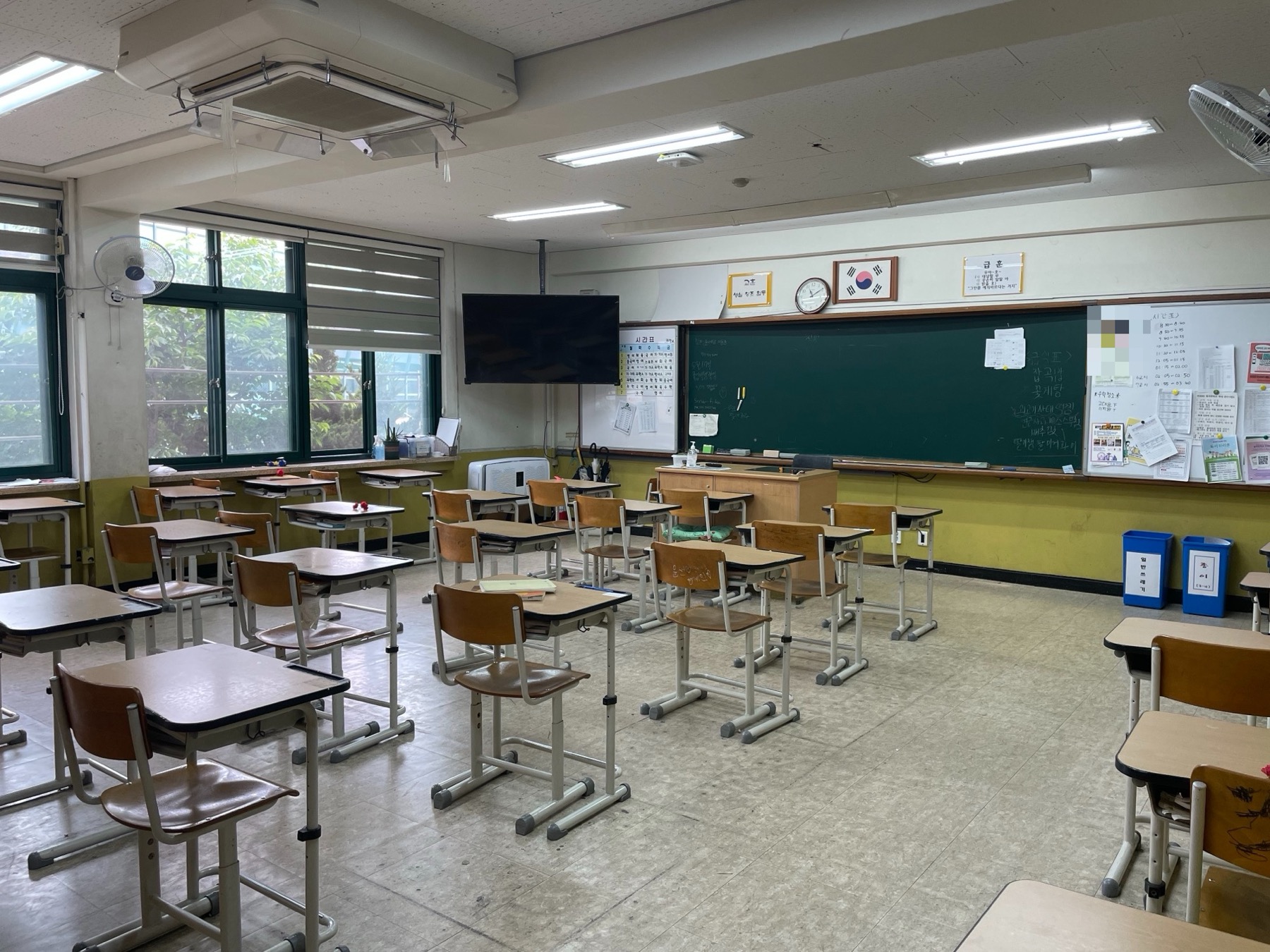
The daily work happens in centers like the Jungnang-gu Lifelong Education Center for People with Developmental Disabilities in Seoul, one of the facilities using the system.
“It records for us, observes for us, and even analyzes the trends in change. We are getting a lot of help.”Park Jong-du, head of the Jungnang-gu Lifelong Education Center, to KBS News (translated by AI for Kind)
Behind each support plan are behavior intervention specialists, who are themselves in short supply. With the AI doing the recording, they can spend more time on analysis and support, Dealsite reports.
The Seoul Metropolitan Government ran the first pilot with SK Telecom and plans to bring the system to two more care facilities by the end of 2026. Seoul National University Hospital worked with SK Telecom on the underlying vision AI. At SK Telecom, the Vision Lab led by Yang Seung-ji researched and tested the technology. The company is also working on an AI assistant that parents could consult about their child’s behavior.

Why it matters
Care for people with severe developmental disabilities depends on stretched staff who often leave. CareVia shows how AI can take on observation and paperwork, giving carers more time for the person in front of them. The early numbers are hopeful; independent results and clear answers on consent should come next.
What we could not confirm
- CareVia is still in use: the latest public reports we found are from Dealsite on October 6, 2026, and KBS on October 20, 2026.
- SK Telecom’s own sources give different facility counts: 7, 12 and 18.
- The outcome figures are not independently checked. KBS does not say who counted the drop in challenging behaviors or how, and the 34.6% figure comes from SK Telecom.
- No public source explains how consent works, who can see the clips or how long they are kept. SK Telecom’s ITU entry says raw video stays on the device; its newsroom describes teachers rewatching clips remotely.
Questions people ask
What is CareVia?
An SK Telecom AI service that runs on existing CCTV in South Korean care centers and logs nine challenging behaviors, such as self-harm and wandering, for behavior specialists.
Does the AI stop self-harm?
No. It detects and records challenging behaviors, including self-harm. Specialists use the records to understand triggers and plan support, which people provide.
Where is CareVia used?
In about a dozen South Korean care facilities, according to SK Telecom, though its own counts vary. Seoul plans to add two more by the end of 2026.
Does it work?
Early results are positive but limited: up to 90% less recording time (SK Telecom) and about half as many challenging behaviors at four Seoul facilities (KBS). No independent evaluation has been published.
What about privacy?
The system recognizes individuals and keeps video clips for remote review. Public sources do not explain how consent works for adults who cannot easily give it, or how long clips are kept.
This story supports
Sources (8)
Newspim, AI fills gaps in developmental disability care (in Korean), Seo Young-wook, June 10, 2026
SK Telecom, Local Community Report 2025, August 2026
ITU, AI for Good Innovate for Impact Report 2025, AI-Powered Behavior Recognition for Developmental Disability, pp. 753–757
Fact-checked against sources on October 25, 2026. Spot an error? Tell us.