Problem
Yamunanagar, in the north Indian state of Haryana, is a plywood town: 647 of the district’s roughly 1,471 small factories work with wood. They burn their own sawdust for heat and buy their electricity from the grid.
That power is expensive. Small firms and their associations told WRI India that electricity made up about 40 percent of their monthly variable costs, and Haryana’s industrial tariffs stood at INR 8.15 to 8.90 per unit in 2025. Meanwhile their wide factory roofs sat empty.
India’s national rooftop solar subsidy covers homes, not factories. Owners are busy with production, often do not know the technology or which installers to trust, and buy one at a time, so they miss bulk prices.
AI solution
WRI India, an Indian research charity associated with the World Resources Institute, built a two-step approach with funding from the MacArthur Foundation.
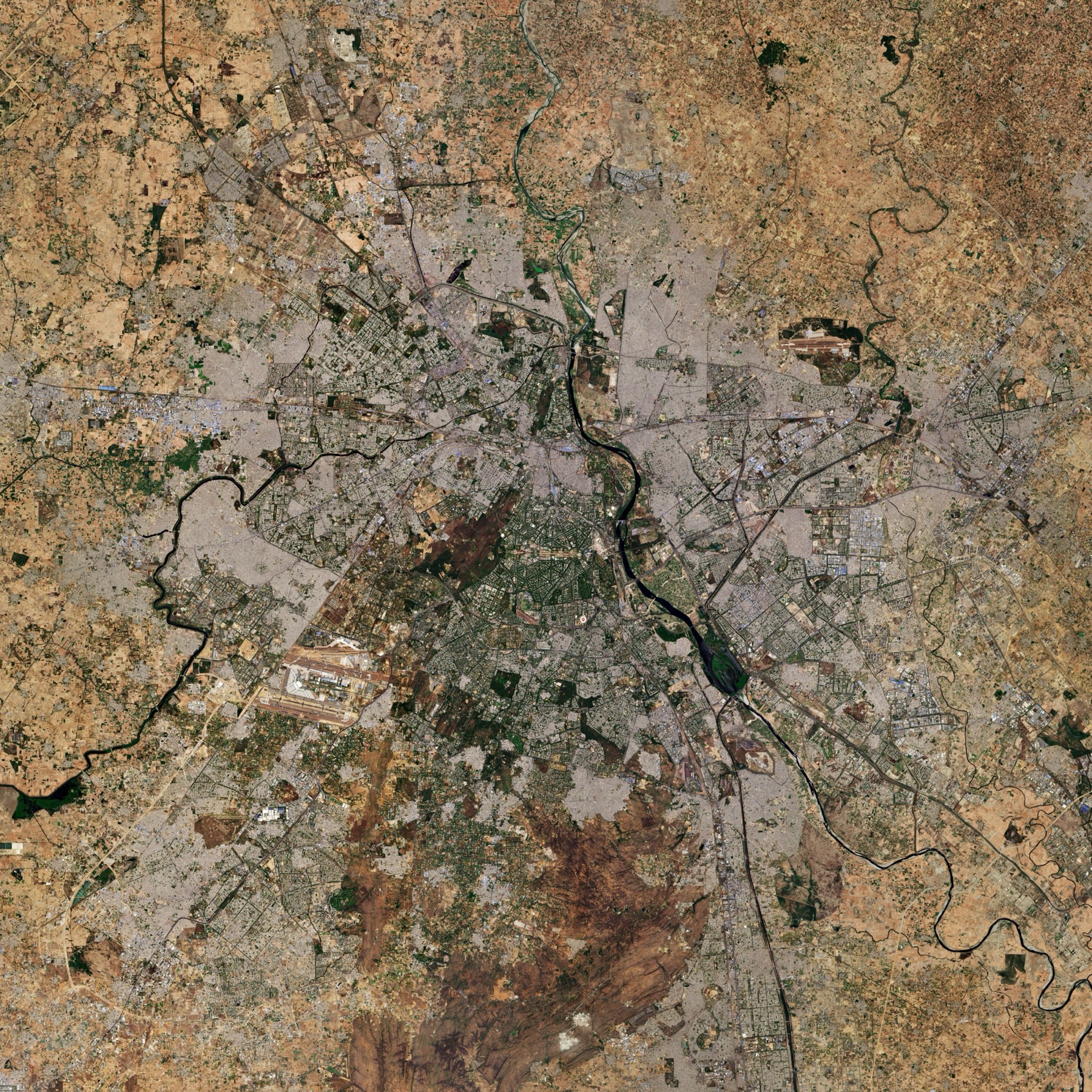
Step one: read the roofs from space. The team took free images from the European Sentinel-2 satellites, where each pixel covers 10 by 10 meters, and removed trees and fields using the near-infrared band. It then trained a neural network, a type of AI that learns from examples, to trace building outlines, using OpenStreetMap’s mapped buildings as the examples. A simple formula turned roof area into solar capacity: 70 percent of each roof counted as usable, multiplied by local sunlight.
With no site visits, the team sized up four industrial clusters in Haryana and found about 34 megawatts-peak (MWp) of potential, including about 2.8 MWp in the Yamunanagar plywood cluster.
Step two: buy together. With MSME DI Karnal, a government office for small businesses, and the local chapter of the industry group Laghu Udyog Bharti, WRI India ran sessions with factory owners on costs, policy and vendors. It then drafted one tender for 2.5 MWp across 11 factories, sent it mainly to installers approved by the state renewable energy agency, and gave its technical help free.
How it works
- 01 Map A neural network traces factory roofs on free Sentinel-2 satellite images.
- 02 Estimate A simple formula turns usable roof area and local sunlight into solar capacity.
- 03 Pool Factory owners join one shared tender, sent mainly to state-approved installers.
“This included providing them information on payback periods, supporting policy frameworks, different technologies and reliable vendors,” Abhishek Bhardwaj of WRI India told The Economic Times in 2025.
Impact
All results below come from WRI India’s own practice note, published in August 2025. There is no independent evaluation.
The AI held up reasonably well. WRI India says the model identified buildings with 85 to 90 percent accuracy. For six factories, its capacity estimates reached 84 to 94 percent agreement with what the solar vendor proposed after site visits; for one unit, 100 kWp against the vendor’s 110 kWp. The yardstick is the vendor’s quote, not a measured survey, and WRI India notes its method misses shading and roof slope.
Buying together brought better deals. The pooled tender settled at INR 39,480 per kWp, compared with INR 42,000 without aggregation, according to the installer: about 6 percent cheaper. WRI India’s summary says about 7 percent. Firms also got inverter warranties doubled from 5 to 10 years, 540-watt panels, and free maintenance and panel cleaning in the first year. WRI India projects that a 110 kW system turns cash-positive in year four, a year sooner than at the unpooled price.
Panels went up, slowly. Installation started in April 2023 with 206 kWp on two roofs. Other owners joined as their finances recovered. By the end of 2024, seven of the firms in the tender had installed solar (the note gives both 11 and 13 as the number of firms), 1.8 MW in total, or about 72 percent of the demand WRI India had pooled.
From first meeting to panels
- Mid-2021First meetings in the Yamunanagar cluster.
- April 2023Installation starts with 206 kWp on two roofs.
- End of 2024Seven firms have installed 1.8 MW in total.
- August 2025WRI India publishes its practice note on the pilot.
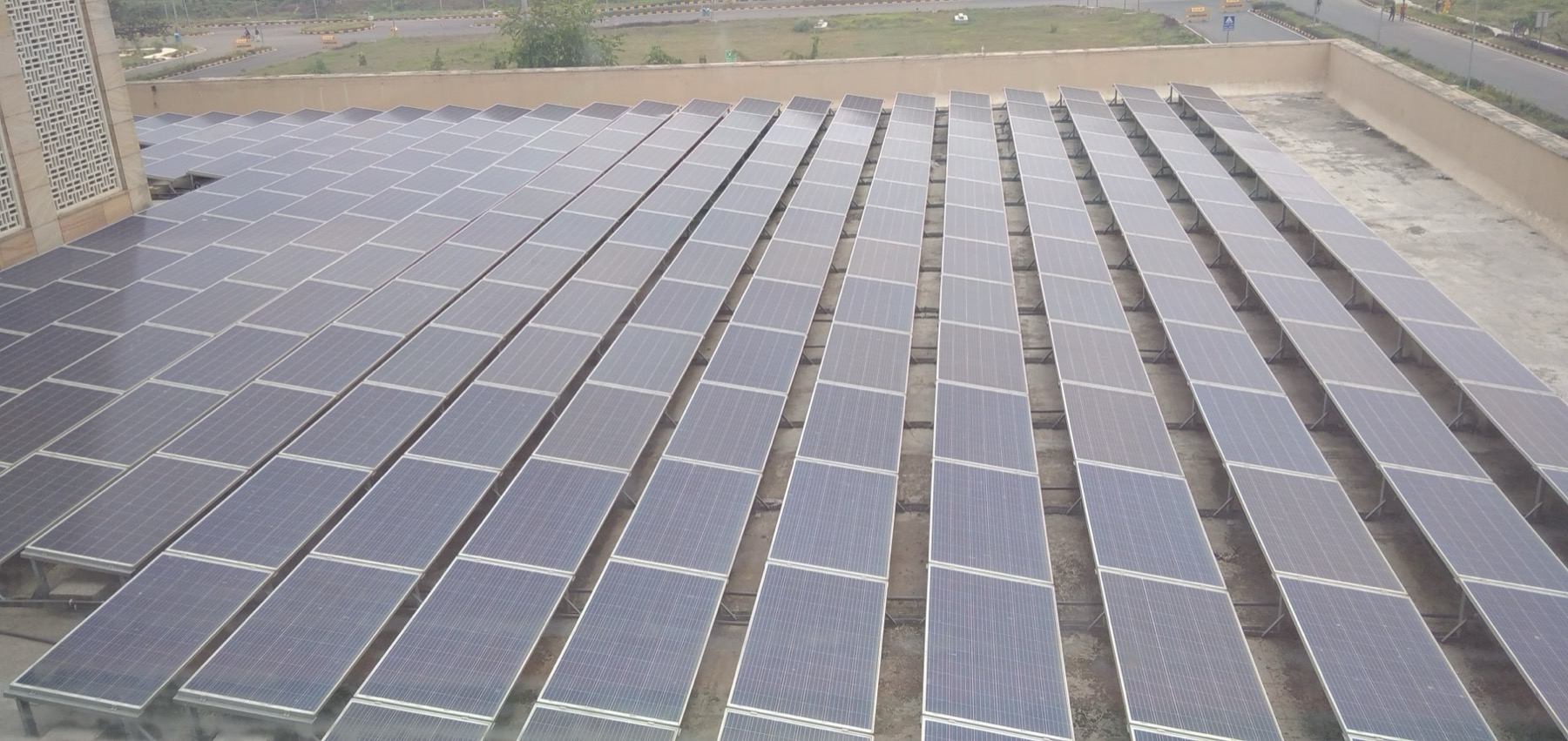
Carbon is estimated, not measured. WRI India estimates that the first 206 kWp will avoid about 5,768 tonnes of carbon emissions over 25 years, an average of roughly 230 tonnes a year (our division). This is a model based on government assumptions, not metered output, and no figure has been published for the full 1.8 MW.
What the AI could not fix. During COVID-19, production stopped and sales and credit dried up. Panel prices rose. Most Yamunanagar factories had old asbestos roofs too weak for panels, and owners would not replace them mid-pandemic. Companies that rent roofs and sell the power to the owner declined, citing poor credit ratings and wanting at least 250 to 300 kWp per site, while these factories needed 100 to 150 kWp. From the first meetings in mid-2021 to the first panels took more than a year and a half.
No source shows a bank lending on the strength of the AI assessment. Firms bought their systems outright, some with bank loans. One factory used a Haryana scheme that cut its loan interest from about 8 percent to 3 percent. SIDBI, a national bank for small industry, offered a loan, but in the end the owner borrowed from a local bank branch they had worked with for over 20 years. That trust, the note says, let the bank overlook its usual checks such as credit ratings.
Where it stands now. The 2026 ITU Interim Report lists the project as a pilot. WRI India’s June 2026 annual report mentions only the 2025 publication.
People
The practice note’s authors are Abhishek Bhardwaj, then a Senior Program Associate and now Program Manager for Energy at WRI India; Akansha Saklani, who leads WRI India’s Energy Access Explorer mapping platform in India; and Kajol, who formerly led the energy team’s industrial decarbonization work.
Beyond the model, WRI India gathered electricity bills, brokered talks between owners and the installer, and inspected the equipment and installations against the agreed specifications. Officials at MSME DI Karnal opened doors to the cluster’s associations. The note thanks ten people from the factory side by name.
No factory owner has been named or interviewed. In WRI India’s 2023 video, an unnamed factory-side speaker praises the better prices and 540-watt panels.
Bhardwaj still sees a role for rent-a-roof companies, even though they declined here. He told The Economic Times that “the RESCO model” (rent-a-roof) coupled with demand aggregation “can be an effective strategy to enhance uptake of RTS with minimal additional costs” (RTS stands for rooftop solar).
Why it matters
Small factories use a lot of power but are hard for solar companies and banks to serve one by one. Haryana alone had 56 industrial clusters in 2024, with over 47,000 units. This pilot suggests that free satellite data and a modest AI model can find that potential cheaply. Whether panels go up still depends on finance, sound roofs and a trusted local partner.
What we could not confirm
- The latest public sign of the project is WRI India’s June 2026 annual report, which mentions only the 2025 practice note. We found no news of new installations since the end of 2024.
- All results come from WRI India’s own practice note, and some figures differ inside it: it gives both 11 and 13 firms in the tender, and the prices give a 6 percent saving where its summary says 7.
- The model’s 85 to 90 percent accuracy is WRI India’s figure. Its own table shows 85 percent of buildings but only 66 percent of non-buildings classified correctly.
Questions people ask
What did the AI do in this project?
It traced building outlines on free satellite images so WRI India could size up the solar potential of four Haryana clusters without site visits.
How much solar was installed?
By the end of 2024, seven of the participating firms had installed 1.8 MW in total, according to WRI India.
Did it lower costs?
Yes, by about 6 percent (WRI India says about 7): INR 39,480 per kWp against INR 42,000 quoted without pooling.
Is it still running?
The pilot ran from 2021 to 2024, with about 16 percent of pooled demand still in progress or pending at the end of 2024. No second phase has been reported.
This story supports
Sources (7)
WRI India research page for the practice note, August 28, 2025
WRI India, Scaling up of Clean Energy Technologies in MSMEs: Haryana (video), December 14, 2023
WRI India, Annual Report 2025-26, June 2026
WRI India profile, Abhishek Bhardwaj
ITU, AI for Good Innovate for Impact Interim Report 2026, WRI India rooftop solar demand aggregation use case, pp. 1201–1206
Fact-checked against sources on October 25, 2026. Spot an error? Tell us.