Problem
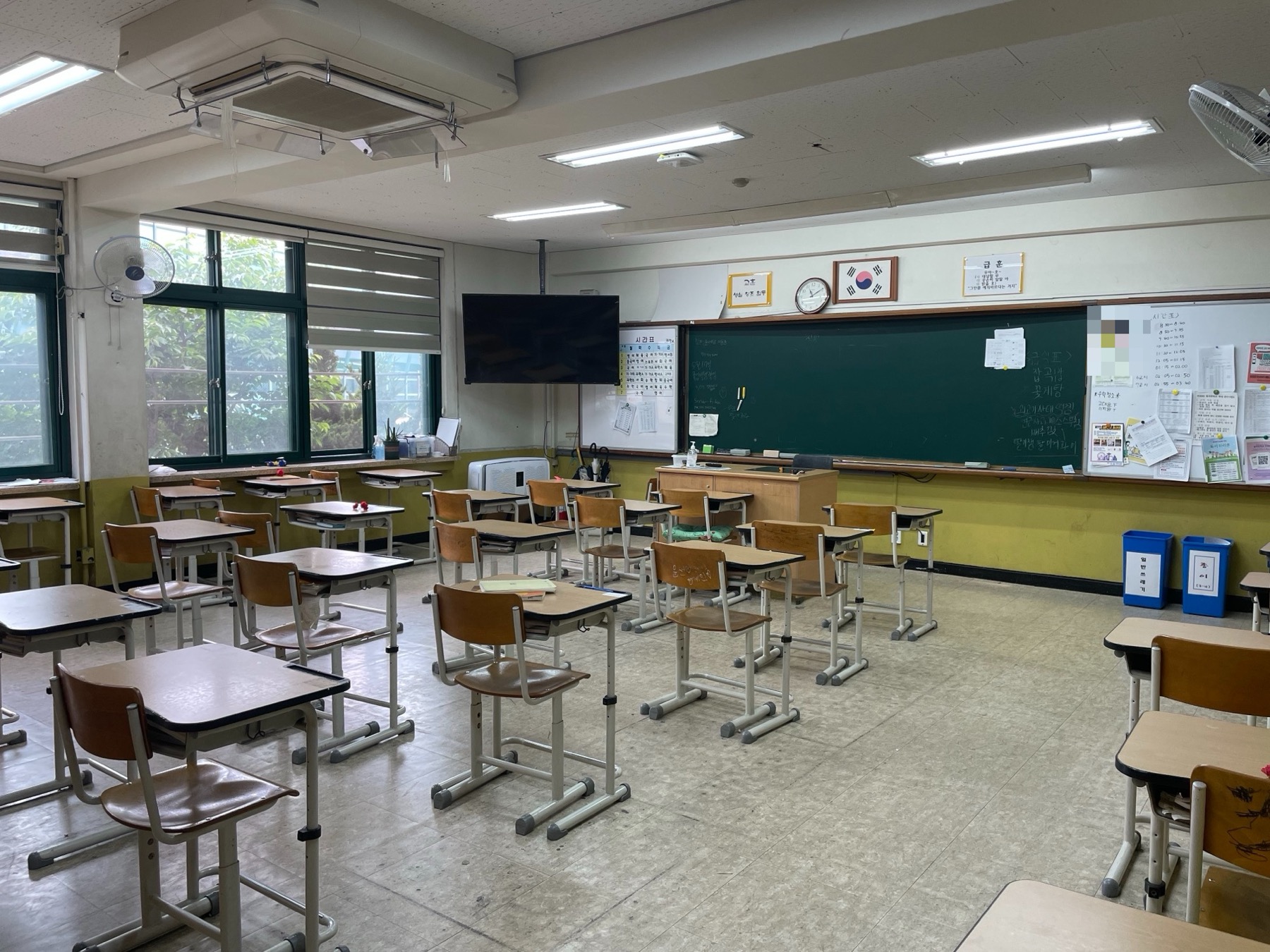
Eom Tae-sang teaches at Jeonju Jayeon Elementary School in South Korea and leads EdTech School, a teachers’ group. His author profile says he is also a doctoral student at Korea University, Codle’s research partner; no source says he works on that project. In a chapter of the group’s book for teachers, reported in May 2025 by EduPlus (a co-publisher of the book), he described a familiar problem in his informatics lessons: one teacher cannot easily check every student’s code, or tell whether the children behind the monitors are absorbed in coding.
Jeon Jonghyun hit the same wall at the admissions consulting academy he ran, teaching high school seniors to code online for their university applications. “At that time, we educated students online and tried various software, but none were satisfactory,” he told MoneyToday in April 2026, in the publisher’s AI-translated English edition. As student numbers grew, he could not check in real time who was keeping up. Interviews with more than 100 teachers showed him the same problem in public high school IT classes.
Generative AI adds a second worry. At the ITU AI for Good Global Summit in Geneva on July 7, 2026, Jeon argued it can weaken students’ thinking. Teachers also fear an outside AI tool can drift off the lesson or out of their control.
AI solution
Team Monolith built Codle to run in a web browser. Students write code in block languages such as Scratch and Entry, or in Python, with nothing to install. Teachers can open and run a student’s code, and a live dashboard shows how the whole class is doing.
In Geneva, Jeon set out three design rules for Codle’s AI. It works only inside verified course content, to cut down on made-up answers (what AI researchers call “hallucinations”). It holds back the answer and offers guiding questions and hints. And the teacher adjusts and monitors the learning in real time.
A feature called Socroom shows the idea most clearly. The teacher chooses a topic and the session settings. Rather than hand over an answer, the AI asks one question after another, and students go back to their textbooks and notes to reply in their own words. The chat cannot wander off the topic. Afterwards, the teacher can read each conversation to see how the student reasoned, and respond. Since January 2026 it has also run on its own as Socroom Lite, which students can join by phone with a QR code and a nickname, no account needed.
How Socroom works
- 01 Set The teacher chooses a topic and the session settings.
- 02 Ask The AI asks one question after another, and students reply in their own words.
- 03 Review The teacher reads each conversation to see how the student reasoned, and responds.
Codle’s coding helper is less strict. When a student’s code throws an error, it explains what caused it and which way to go to fix it, according to an October 2025 profile. The company presents this as helping students fix errors themselves. Teachers can also restrict the AI for their class.
Impact
Codle is deployed at scale in South Korea. All figures are the company’s, mostly via the press.
- Schools and users: more than 750 schools and more than 160,000 users as of October 2025. These are users, not weekly active students, and not all are school pupils.
- Teachers: more than 1,700 verified teachers by October 2025, in a country with about 3,000 IT teachers, according to an interview with the company.
- Growth: 800 schools cumulatively by April 2026, which the company says is nearly half of high schools that offer IT classes; about 3,000 to 4,000 new Korea University students also use it. A company job posting online in October 2026 gives more than 1,200 schools. Cumulative counts may include schools that have stopped.
- Cost: the company started schools on a free basic tier because of tight budgets, and about 30% of schools pay for extra features (April 2026).
No one has measured learning yet: neither the company nor outside researchers have published data on whether students using the tutor reason better or score higher. Team Monolith says it is developing evidence-based standards for “AI-student collaborative learning” with Korea University, and its ITU entry describes that analysis as future work. In a 2025 public program, 706 students took Team Monolith’s data-science tracks; surveys before and after reportedly showed improvements, but no figures were published, and the report does not mention the AI tutor.

No source shows Codle reaching low-income or rural students in particular. Abroad, the work is at an early stage: in June 2026 the company finished teacher training at five private international schools in Sharjah, in the United Arab Emirates, with a four-week classroom pilot to follow.
The company’s plans for student data raise open questions. It intends to turn Codle’s learning data into competency indicators for university admissions and hiring. And if a teacher turns it on, Socroom Lite can score students’ dialogues on five criteria and show scores and rankings. Families and schools may want to know how students’ conversations are stored and used, and how ranking fits a tool meant to make them think. The ITU entry says the data is not public and that Korea University is helping build a de-identified analysis pipeline.
People
Team Monolith was founded in October 2021 by four co-founders, among them Jeon and Eom Eunsang. Jeon is co-CEO. “In traditional classrooms, teachers lecture while students just sit and listen,” he said in 2025 (AI-translated by the publisher). Reporting on the Geneva talk, Digital Times quoted his view of the company’s aim: “AI should not think in place of students, but should make them think more deeply” (translated by AI for Kind).
Teachers carry much of the work. The company offers them free one-to-one training and says that, as of February 2025, it had given Codle-based remote training to 12,000 teachers.
In his chapter, Eom Tae-sang highlighted what Codle shows the teacher, not the AI tutor. “Codle has many more features, but the one that stands out most is learning analytics,” he said, as quoted by EduPlus. “Codle is a hands-on coding education tool and, at the same time, a digital tool that supports learning analytics” (both translated by AI for Kind).
Why it matters
Schools everywhere are working out how students can use generative AI without handing it their thinking. Codle builds that restraint into the product, keeps the teacher in charge, and already runs in hundreds of Korean schools. Whether the design helps students learn has not yet been shown.
What we could not confirm
- Codle appears to be running. The latest public signs we found are a company job posting online in October 2026 and Jeon’s talk in Geneva in July 2026.
- All school and user numbers come from the company. Counts differ by date: more than 750 schools in October 2025, 800 in April 2026, and more than 1,200 in an undated job posting.
- We could not tell which AI tools, including Socroom inside Codle, come with the free plan. The company’s pricing and help pages also give different student limits, 400 and 300.
- We found no public explanation of how students’ conversations are stored and used.
Questions people ask
Does Codle's AI give students the answers?
Its Socroom tutor is designed not to: it asks step-by-step questions within a topic the teacher sets. The coding error helper goes further, explaining what caused an error and which way to go to fix it.
Is there evidence that it improves learning?
Not yet. Neither the company nor independent researchers have published learning results.
Is Codle free?
Partly. The company's pricing page (October 2026) lists a free Basic plan for up to 400 students, with some AI features and no live monitoring. The Pro plan, with all AI tools, costs 22,000 won per student per semester. Socroom Lite is free to start.
Where is Codle used outside Korea?
Mostly in early pilots. Some schools in the United Kingdom had adopted it by October 2025, and in June 2026 the company trained teachers at five private international schools in Sharjah, UAE, ahead of a four-week classroom pilot.
This story supports
Sources (18)
YES24, author page for Eom Tae-sang (Korean, accessed October 25, 2026)
The Asia Business Daily, Korean original of the Codle interview, October 2025 (Korean)
자동화·효율화 앞세운 에듀테크 스타트업들의 교육 인프라 혁신, Etoday, December 21, 2025 (Korean)
Baek Bong-sam, 팀모노리스, 대화형 AI 학습 '소크룸 라이트' 출시, ZDNet Korea, January 12, 2026 (Korean)
Kim Kyung-a, 팀모노리스, UAE AI 리터러시 PoC 참여, IT Chosun, June 18, 2026 (Korean, company press release)
Team Monolith newsroom (accessed October 25, 2026)
Team Monolith, 콘텐츠 매니저 job posting (accessed October 25, 2026)
Codle pricing page (Korean, accessed October 25, 2026)
Codle help center FAQ, Is Codle free? (Korean, accessed October 25, 2026)
Socroom Lite page (Korean, accessed October 25, 2026)
Codle feature page on personalized learning (Korean, accessed October 25, 2026)
Fact-checked against sources on October 25, 2026. Spot an error? Tell us.